Europe on a Budget — How to Travel Europe Without Overspending
Travelling Europe on a budget is completely achievable with the right approach. Here are the money saving strategies I actually use — from booking flights to avoiding hidden fees on the ground.
5/31/202610 min read
"I have independently tried and tested everything recommended. As an Amazon Associate I earn from qualifying purchases."


Travelling Europe does not have to cost a fortune. The people who come back saying Europe was expensive are usually the ones who booked late, paid for checked bags they did not need, used their home bank card for every transaction, and bought everything at the airport. The people who come back saying Europe was affordable did the opposite. They planned early, travelled light, and made a few smart decisions before they even left home.
Here is everything I actually do to keep a Europe trip genuinely affordable without sacrificing the experience.
The single biggest money saving decision on any Europe trip
Avoiding checked bag fees on budget airlines saves between €50 and €150 per return trip. The right personal item bag and a proper packing system means you never pay them.
Book Early and Actually Mean It
The most reliable way to travel Europe affordably is to book flights and accommodation significantly earlier than most people do. This sounds obvious yet most people still leave it too late.
Budget airlines like Ryanair and EasyJet release seats months in advance and the cheapest fares are almost always available right at the point of release, not in the weeks before departure when everyone else is searching at the same time. I have saved hundreds of dollars on Europe flights simply by checking prices as soon as I had rough travel dates rather than waiting until everything was perfectly planned.
The same logic applies to accommodation. A hostel room or budget hotel that costs €40 a night booked three months ahead can cost €90 or more booked three weeks before departure. The room is identical. The price difference is entirely about timing.
What I actually do is set up email alerts on Google Flights the moment I know I am planning a Europe trip. Google Flights lets you track specific routes and sends a notification when prices drop below a threshold you set. I have caught genuinely cheap fares this way that I would never have found by manually searching at the right moment. Ryanair and Booking.com both send sale notifications to email subscribers too, so signing up to their mailing lists costs nothing and occasionally delivers a useful discount on a booking you were going to make anyway.
Travel Light and Stop Paying for Bags
Checked bag fees on budget European airlines are one of the least visible but most significant costs on a Europe trip. Ryanair charges between €20 and €50 each way for a checked bag depending on the route and how far in advance you add it. On a return trip that is between €40 and €100 gone before you have even boarded, and that is per person per flight.
Across a multi-city Europe trip involving several budget airline legs, those fees can easily add €200 or more to the total cost. That is two or three nights of accommodation handed straight to the airline for no reason.
Travelling carry-on only eliminates this cost entirely. The key is having the right bag. Ryanair's free personal item allowance is 40 x 20 x 25cm and most regular backpacks do not fit within this when packed. Getting a bag specifically built to those dimensions means you qualify for the free allowance on every flight without any anxiety at the gate.
The bags that actually fit Ryanair's 40x20x25cm personal item sizer Three options at different price points, all confirmed to pass the gate check every time. Read the post →
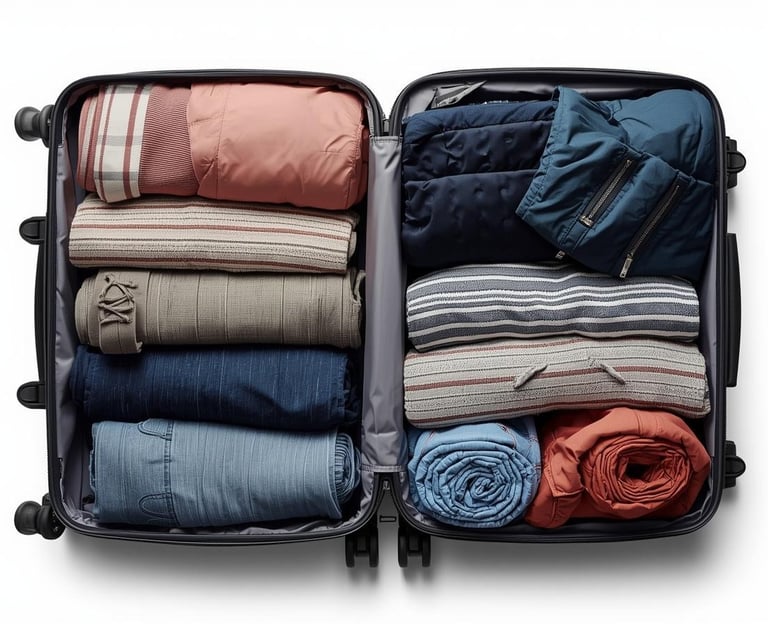
Once you have the right bag the next challenge is fitting everything you need into it. Packing cubes are what make this achievable on trips longer than a few days. They organise your clothing into compressed sections that use every centimetre of space efficiently and make repacking between cities take minutes rather than the usual morning chaos.
How packing cubes make carry-on only work for any Europe trip The exact system I use to fit a week or more of clothing into a single carry-on bag. Read the post →
Get a Travel Card Before You Leave Home
This is one of the easiest money saving changes you can make for a Europe trip and one of the most consistently overlooked. Using a standard Australian bank card for transactions in Europe typically costs 2 to 3% in foreign transaction fees on every single purchase plus a fixed fee per transaction. Across two weeks with dozens of daily transactions covering coffee, transport, meals, and entry fees, those charges add up to a meaningful amount of money that quietly disappears from your account.
A travel card with no foreign transaction fees eliminates this entirely. Cards like Wise, Revolut, or a Bankwest Zero Mastercard let you spend in euros, pounds, and other European currencies at the real exchange rate with no fees attached. Setting one up before you travel takes about ten minutes and costs nothing to do.
What I do is load a Wise card before every Europe trip. It holds multiple currencies, converts at the mid-market rate which is always better than anything offered at airport currency exchange, and has no foreign transaction fees. For cash I withdraw from local ATMs using the Wise card rather than exchanging money at the airport where rates are consistently poor. I keep a small amount of local currency cash for markets and smaller restaurants that still operate cash only, but the vast majority of spending goes on the travel card.
Use Budget Airlines Smartly
Budget airlines like Ryanair, EasyJet, and Wizz Air make travelling between European cities genuinely affordable. A flight from London to Rome or Barcelona to Amsterdam can cost less than €30 when booked early. That kind of pricing fundamentally changes how you approach a Europe itinerary and makes cities that would otherwise require expensive train journeys easy and affordable additions to a trip.
The word to focus on is smartly. Budget airlines are genuinely cheap when you follow the rules and genuinely expensive when you do not. Book early, travel with only your free personal item allowance, check in online before arriving at the airport, and do not assume anything is included that you have not specifically paid for.
I sign up to Ryanair and EasyJet email lists before planning any Europe trip. Both send regular sale notifications and I have found routes for a fraction of standard pricing simply by being on the list and moving quickly when a sale landed in my inbox. The sales are real but they usually last only 24 to 48 hours so you need to be ready to act.
Consider a Eurail Pass for Multi-Country Train Travel
If your Europe itinerary involves travelling between multiple countries by train, a Eurail pass is worth seriously considering rather than booking individual tickets each time.
European train travel bought ticket by ticket adds up quickly. A single high-speed journey between major cities can cost €80 to €150 at standard pricing. Across a trip involving six or eight journeys between countries those individual costs become one of the largest line items in your budget.
A Eurail Global Pass covers train travel across 33 European countries for a fixed price based on how many travel days you select. For trips involving significant rail travel between multiple countries it frequently works out cheaper than the equivalent individual tickets, particularly when you factor in the flexibility of being able to board trains without pre-booking specific services.
A Eurail pass makes the most sense when you are visiting four or more European countries, you want flexibility to change plans without rebooking, you are travelling during peak summer when individual tickets sell out and prices spike, or you plan to use night trains between cities which effectively replaces a night of accommodation cost. If you are staying in one or two countries and making only a few rail journeys, individual advance tickets will usually work out cheaper.


Free Europe Packing Checklist
If packing for Europe feels overwhelming, I’ve put together the exact checklist I used to stay organised and avoid overpacking.
It works alongside the packing system in this post and helps keep everything simple on travel days.
Accommodation: What Actually Saves Money
Accommodation is typically the largest single cost after flights and the difference between smart and average choices can be €30 to €50 per night. Across two weeks that represents a significant saving that can go toward experiences instead.
The most reliable approach is to use Booking.com or Hostelworld to find and compare properties, then check whether the property has its own website and whether booking direct offers a lower rate. Many smaller hotels and guesthouses give a small discount for direct bookings because they avoid paying commission to the aggregator. It takes an extra two minutes and occasionally saves a meaningful amount.
Modern European hostels are not what they were a decade ago and are worth considering even if you have not used them before. Private rooms in quality hostels regularly cost less than budget hotels while offering better locations and more interesting atmospheres. Staying one metro stop or a ten minute walk from the main tourist area consistently brings prices down 30 to 40% for an identical standard of room. In cities with reliable metro systems, which covers most major European destinations, that distance costs almost nothing in convenience.

Some upfront purchases make financial sense specifically because they eliminate recurring costs on every trip.
A bag that meets budget airline personal item dimensions means never paying a checked bag fee. If you fly two Ryanair routes on a single trip and avoid a €40 each-way fee, a €40 bag has paid for itself on its first outing.
A quality travel adapter with multiple USB ports costs far less than buying overpriced replacements at airport shops mid-trip. One adapter that covers every European country including the UK means you are never in that situation.
🔌 The travel adapter I use across all of Europe One adapter that covers every European country including the UK with USB ports so everything charges simultaneously Read the post →
The Gear That Pays for Itself
Packing cubes are a one-time purchase that lasts years and pays for itself on the first trip where they help you avoid a checked bag fee. A high capacity power bank eliminates the cost of hunting for cafes with outlets or paying for phone charging services mid-sightseeing day.
🧳 The complete gear list for a budget Europe trip Every piece of kit worth buying before a Europe trip and how each one saves you money on the ground. Read the post →
Saving Money on the Ground Once You Are There
Getting to Europe affordably is only half the equation. What you spend once you arrive is equally important and equally controllable. The restaurants immediately surrounding major tourist attractions across Europe operate on tourist pricing with food that is often mediocre and expensive by any reasonable measure. Walking two or three streets back from the main square consistently produces better food at prices that make sense. The rule I follow is straightforward: if there is a host standing outside actively trying to wave you in, keep walking.
Most major European cities offer day or multi-day transport cards covering unlimited metro, bus, and tram travel for a fixed price. A single metro journey in many cities costs €2 to €3. A day pass covering unlimited journeys runs €8 to €12. If you are taking four or more journeys on a sightseeing day the pass pays for itself.
Every major European city has significant free cultural attractions alongside paid ones. Many of the best museums in London are entirely free. Rome's churches contain some of the most significant art in the world and most are free to enter. Researching free options before you arrive means you are not paying for everything out of habit.
Tap water across most of western Europe is safe to drink and free. Buying bottled water throughout a trip adds €3 to €5 per day to your costs. A reusable water bottle filled from hotel taps, public fountains, and restaurant requests eliminates that expense entirely across a long trip.
💶 The cheapest thing you can do before any Europe trip Pack carry-on only. No checked bag fees, no waiting at baggage claim, no lost luggage risk. The right bag and a proper packing system makes it achievable on any trip length.
Frequently Asked Questions
How much money do you need per day in Europe on a budget?
A realistic daily spend in Europe excluding flights and accommodation sits around €50 to €80. This covers food, local transport, entry fees, and general spending. Staying in hostels, eating away from tourist areas, and using free attractions regularly can bring this closer to €30 to €50 per day. Major cities like London, Paris, and Zurich sit at the higher end of the range while eastern European cities like Prague, Budapest, and Krakow are significantly more affordable.
What is the cheapest way to travel between European cities?
Budget airlines booked early are often the cheapest option for longer distances. For shorter distances trains booked in advance can be equally affordable and considerably more comfortable. Night trains between cities are worth considering for longer journeys because they save a night of accommodation cost which frequently makes the total price competitive even when the ticket itself is not the cheapest option.
Is a Eurail pass worth it for a Europe trip?
It depends on the itinerary. For trips covering four or more countries with frequent rail travel a Eurail pass typically offers better value than individual tickets, particularly during peak summer season when individual ticket prices increase and availability tightens. For shorter trips concentrated in one or two countries individual advance tickets usually work out cheaper.
How do I avoid foreign transaction fees in Europe?
A travel card with no foreign transaction fees is the straightforward answer. Wise and Revolut are the most commonly used options for Australian travellers. Set one up before you leave, load it with the currencies you need, and use it for all card transactions in Europe. Withdraw cash from local ATMs using the travel card rather than exchanging money at the airport where rates are consistently poor.
What is the best way to find cheap flights to Europe?
Set up Google Flights price alerts for your route as early as possible and sign up to Ryanair and EasyJet mailing lists for sale notifications. Be flexible on travel dates if possible since mid-week flights are consistently cheaper than weekends. Book as soon as you find a price you are comfortable with rather than waiting and hoping it drops further.
How do I avoid checked bag fees on European budget airlines?
Travel with only a personal item bag that meets the airline's free allowance dimensions. For Ryanair this is 40 x 20 x 25cm. For EasyJet it is 45 x 36 x 20cm. A bag built to these dimensions combined with a packing cube system to fit everything inside eliminates checked bag fees on every flight.
Is it cheaper to book accommodation in advance or last minute in Europe?
Almost always in advance, particularly during summer peak season when popular cities fill up and prices increase significantly closer to the date. The exception is shoulder season in less popular destinations where last minute availability sometimes produces discounts on unsold rooms. For a summer Europe trip booking three to six months ahead consistently produces better prices than waiting.
Still planning your Europe trip?
Start with what makes the journey easier — not more complicated.
Contact
Subscribe
hello@europeunpacked.com
© 2026. All rights reserved.
This page may include affiliate links — at no cost to you.