
Best Travel Pillow for Long Haul Flights to Europe 2026 — Honest Review
Looking for the best travel pillow for long haul flights to Europe? Here is an honest comparison of three genuinely different options — the Trtl, Cabeau Evolution S3, and a compact inflatable — so you can pick the right one for how you sleep on planes.
6/14/202610 min read
"I have independently tried and tested everything recommended. As an Amazon Associate I earn from qualifying purchases."


A long haul flight to Europe from Australia is anywhere between 17 and 24 hours depending on your route and connections. That is a long time to be sitting in an economy seat and the difference between arriving with some level of energy and arriving completely wrecked often comes down to whether you managed to sleep. A good travel pillow is not a luxury on a flight that long — it is one of the most practical purchases you can make before a Europe trip.
The problem is that travel pillows are one of those product categories where almost everything looks similar but performs very differently. Here is an honest comparison of three genuinely different options so you can pick the right one for how you actually sleep on planes.
My top pick for most Europe travellers: Trtl Travel Pillow
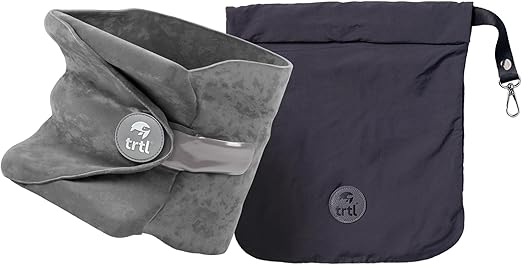
Scientifically proven neck support, weighs only 148 grams, packs down to almost nothing, and machine washable. The most innovative travel pillow available for long haul flights and the one most frequent flyers eventually switch to once they try it.
Why Your Travel Pillow Actually Matters on a Flight to Europe
Most people either skip the travel pillow entirely or buy the cheapest inflatable one at the airport on the way out. Both approaches tend to result in the same outcome — arriving in Europe stiff, exhausted, and spending the first day of the trip recovering rather than exploring.
The flight from Australia to Europe is not a short hop. Even with a stopover, you are looking at a full day of travel. Economy seats on most airlines recline only slightly and the headrests are rarely at the right height for sleeping comfortably without your head rolling to one side every time you drift off.
A properly designed travel pillow solves this by supporting your neck and head in a position that is close enough to how you sleep at home that your body actually relaxes into sleep rather than fighting against the seat. The difference in how you feel on arrival is significant enough that a good travel pillow pays for itself on the first flight.
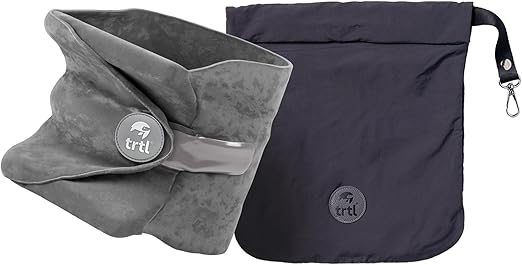
The Trtl is the travel pillow that changes how people think about sleeping on planes. It looks unconventional compared to the traditional U-shaped foam pillow most people picture when they think of travel pillows — but that is exactly the point. Traditional U-shaped pillows have a fundamental design flaw in that they let your head drop forward when you fall asleep. The Trtl solves this with an internal ribbed support structure inside a soft fleece wrap that holds your head at a natural tilted sleeping angle, the position your body naturally wants to sleep in rather than an awkward upright compromise.
The science behind it is genuine. The Trtl was tested by the University of Glasgow and found to provide better neck support than a standard travel pillow. For a long haul flight from Australia to Europe where you are trying to get real sleep in an economy seat across 20 or more hours of travel, that difference is meaningful.
What makes it stand out beyond the support structure is how it packs. At only 148 grams it weighs less than most people's phone cases and rolls into something smaller than a large sandwich. For carry-on only travellers doing Ryanair or EasyJet flights where every centimetre of bag space matters, this is a significant practical advantage over any foam pillow regardless of how well the foam compresses.
The fleece material is soft and genuinely warm which matters on long haul flights where the cabin temperature drops significantly overnight. The whole thing is machine washable which is a practical necessity on any multi-leg Europe trip involving several flights.
The honest caveat is that it supports your head on one side rather than straight back. If you strongly prefer sleeping with your head upright rather than tilted you may find the Cabeau Evolution S3 below suits you better. But for the majority of travellers the tilted position the Trtl provides is closer to how they naturally sleep than sitting bolt upright.
What I like about it:
Scientifically tested and proven neck support design
Weighs only 148 grams — lightest option by a significant margin
Packs to almost nothing — fits in a jacket pocket
Soft fleece material is warm and comfortable on cold flights
Internal ribbed support prevents head from dropping forward
Machine washable
Works on planes, trains, and long car journeys
Endorsed by physiotherapists for neck support
The Three Best Travel Pillows for Long Haul Flights
Best Overall: Trtl Travel Pillow
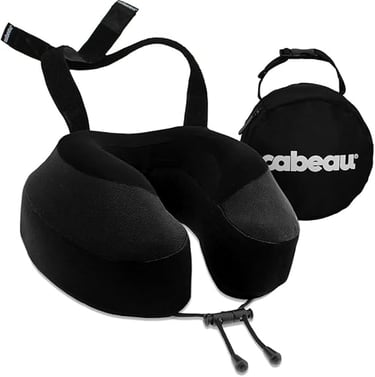
If you prefer sleeping with your head straight back rather than tilted to one side the Cabeau Evolution S3 is the best option available. It solves the main problem with traditional U-shaped pillows by raising off your shoulders so your neck sits in a more natural position, but it works best for travellers who want support in an upright position rather than the tilted angle the Trtl provides.
The Evolution S3 raises off your shoulders by about five centimetres which means your neck sits in a more natural position and the memory foam contours to the shape of your neck rather than sitting generically against it. The front clasp adjusts to hold the pillow in place at exactly the right tension so it stays put when you fall asleep rather than sliding around every time you move.
The memory foam is genuinely good quality and it is the kind that responds to your body heat and molds to your specific neck shape rather than just compressing under pressure. The removable cover is machine washable which matters on a multi-leg Europe trip where the pillow goes through several flights.
The carrying case is a practical detail that most competitors miss. It compresses the pillow significantly and clips directly to your bag handle so it is not taking up space inside your carry-on when you do not need it.
What I like about it:
Raised seat design keeps the pillow off your shoulders for better neck positioning
Memory foam contours to your specific neck shape
Front clasp holds the pillow in place without sliding
Removable machine washable cover
Carrying case compresses pillow and clips to bag exterior
Available in multiple colours
Consistently strong reviews from long haul travellers specifically
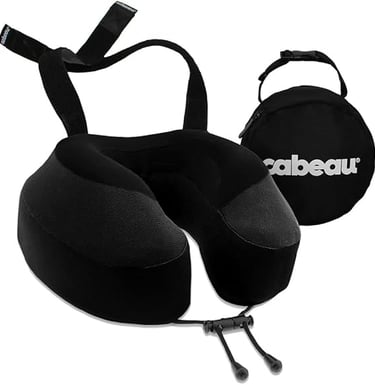
Best for Straight Back Sleepers: Cabeau Evolution S3 Travel Pillow
An inflatable travel pillow is the most practical option for carry-on only travellers who want to minimise what they pack. When deflated the Keemall compresses to the size of a small pouch and adds almost no weight to your bag. When inflated it provides a reasonable level of neck support for the price.
The key advantage over memory foam options is size. A fully compressed memory foam pillow still takes up meaningful space in a carry-on or personal item bag. An inflatable pillow deflated fits in a jacket pocket. For travellers doing Ryanair or EasyJet flights where every cubic centimetre of bag space is accounted for, this makes a real practical difference.
The inflation is simple, a few breaths into the valve and it is ready. The firmness is adjustable depending on how much air you add which is a genuine advantage over foam pillows where the firmness is fixed. If you like a firmer pillow add more air. If you prefer something softer let a little out.
The honest trade-off compared to memory foam is comfort. An inflatable pillow does not contour to your neck the way memory foam does. It provides support but it is more generic in how it sits against your neck. For shorter connecting flights or travellers who sleep reasonably easily on planes this is not a significant issue. For someone who struggles to sleep in economy on a long haul flight and wants the best possible chance of actually sleeping, the memory foam options above are worth the extra investment.
What I like about it:
Deflates to almost nothing — smallest pack size of the three options
Lightweight — adds minimal weight to carry-on luggage
Adjustable firmness depending on how much air you add
Good option for budget travellers or those already committed to carry-on only
Simple valve inflation — no pump required
Comes with a small carry pouch
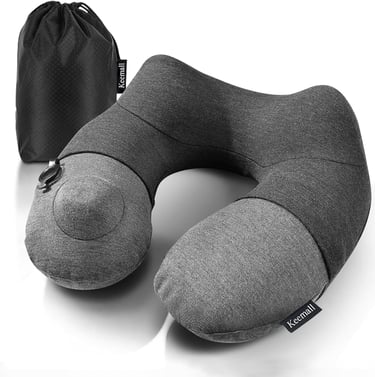
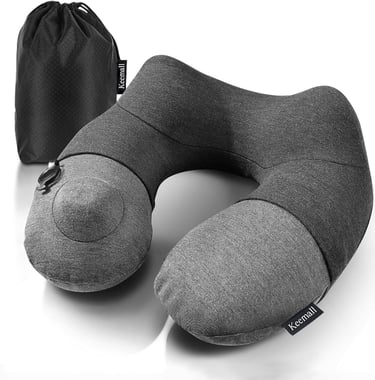
Best Budget and Packable Option: Keemall Inflatable Travel Pillow
Which Travel Pillow Is Right for You?
Choose the Trtl if:
You want the best overall sleep quality on a long haul flight in the most packable format available. It works best for travellers who naturally sleep with their head tilted and anyone who finds traditional foam pillows bulky, uncomfortable around the front of the neck, or too large for carry-on only travel.
Choose the Cabeau Evolution S3 if:
You prefer sleeping with your head upright rather than tilted and want memory foam that contours specifically to your neck shape. The raised design and adjustable front clasp make it the best foam option for straight back sleepers on long haul flights.
Choose the Keemall Inflatable if:
Pack size and budget are your main priorities. The smallest and most affordable of the three and adequate support for shorter connecting flights or travellers who sleep easily on planes regardless of pillow quality.




Free Europe Packing Checklist
If packing for Europe feels overwhelming, I’ve put together the exact checklist I used to stay organised and avoid overpacking.
It works alongside the packing system in this post and helps keep everything simple on travel days.
Other Things Worth Packing for a Long Haul Flight to Europe
A good travel pillow is one piece of a comfortable long haul flight. A few other things that make a meaningful difference on a 20 hour journey to Europe:
Noise cancelling headphones or earbuds
The constant engine noise on a long haul flight is more tiring than most people realise. Noise cancellation removes it and makes sleep significantly easier. It also makes the in-flight entertainment actually enjoyable rather than just audible.
An eye mask
Cabin lights on long haul flights go down but never completely off. A good eye mask blocks residual light from screens, overhead lights left on by other passengers, and the inevitable bright phone screen of the person next to you at 3am.
Compression socks
Long haul flights increase the risk of deep vein thrombosis and swollen legs. Compression socks worn during the flight improve circulation and mean you arrive feeling significantly less puffy and stiff than without them.
A power bank
Your phone works hard on a long haul flight — boarding passes, entertainment, messaging during layovers, and navigation when you land. A high capacity power bank means you arrive with a full battery regardless of whether your seat had a working USB port.
🎧 Essential Travel Gadgets for Europe
Everything worth packing for a Europe trip beyond the basics — including the tech that makes long haul flights and travel days significantly easier.
Read the post →
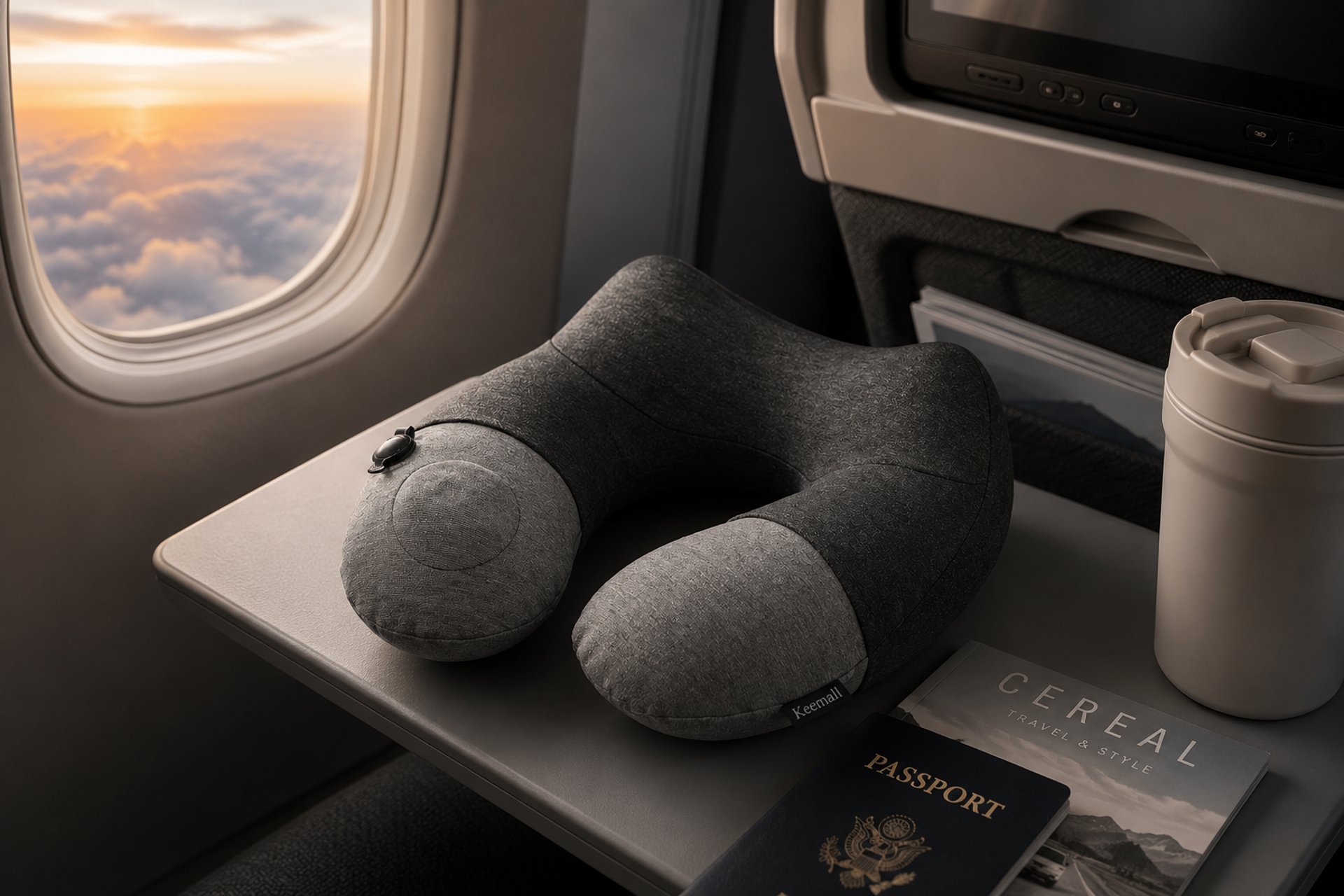
Having the right pillow helps but there are a few other things that make a real difference to whether you actually sleep on a long haul flight:
Book a window seat if you can.
A window seat gives you a wall to lean against and means nobody climbs over you during the flight. Both of these make sleeping significantly easier than a middle or aisle seat.
Avoid alcohol on the flight.
Alcohol on a long haul flight feels like it helps you sleep but it reduces sleep quality significantly and dehydrates you. The result is usually waking up feeling worse than if you had not drunk at all. Water and staying hydrated makes a bigger difference to how you feel on arrival.
Adjust to your destination time zone immediately.
When you board a long haul flight to Europe set your watch or phone to the destination time zone immediately. If it is daytime at your destination when you board, resist sleeping at the start of the flight. If it is night, sleep as soon as possible. Aligning with your destination time zone from the moment you board significantly reduces jet lag on arrival.
Bring your own snacks.
Airline meal service happens at times that suit the airline schedule rather than your sleep schedule. Having your own snacks means you can eat when it suits you rather than being woken up for a meal at the wrong time.
Tips for Actually Sleeping on a Long Haul Flight to Europe
✈️ What I Packed for 14 Days in Europe — The Full Gear List
Everything that earned its place on a real two week Europe trip including the items that made long travel days genuinely manageable.
Read the post →
😴 The travel pillow worth buying before your next long haul flight to Europe
The Trtl is scientifically proven, weighs only 148 grams, packs to almost nothing, and provides genuine neck support that traditional U-shaped pillows simply cannot match. The travel pillow most frequent flyers eventually switch to.
Frequently Asked Questions
What is the best travel pillow for long haul flights?
For most travellers the Cabeau Evolution S3 is the best overall option. The raised memory foam design prevents your head from dropping forward when you fall asleep which is the single biggest problem with standard travel pillows. For travellers who prioritise pack size the Trtl is the most compact effective option available.
Are travel pillows worth it for a flight to Europe?
Yes — particularly for flights from Australia to Europe which are among the longest economy class journeys in the world. The difference between arriving having slept and arriving completely exhausted affects how you enjoy the first two or three days of your trip. A good travel pillow is one of the more impactful purchases you can make before a long haul flight.
What is the difference between the Trtl and a regular neck pillow?
A regular neck pillow is a U-shaped foam or inflatable cushion that wraps around the back and sides of your neck. The Trtl is a soft wrap with an internal support structure that holds your head tilted to one side at a natural sleeping angle. It is significantly more packable than foam pillows and works well for people who naturally sleep with their head tilted rather than straight back.
Can you bring a travel pillow as carry-on on Ryanair?
Yes. Travel pillows do not count as part of your personal item allowance and can be carried separately on your lap or clipped to your bag. The Trtl and inflatable options are small enough to fit inside a personal item bag if you prefer to pack them away.
How do I stop my head from falling forward when sleeping on a plane?
The main cause of head dropping forward on a plane is a travel pillow that does not support the front of your neck. The Cabeau Evolution S3 addresses this with a raised design and adjustable front clasp that holds your head in position. The Trtl addresses it with an internal support structure that keeps your head tilted at a stable angle.
Is an inflatable travel pillow as good as memory foam?
For most long haul travellers no. Inflatable pillows provide adequate support but do not contour to your neck the way memory foam does. The main advantage of inflatable pillows is pack size — they compress to almost nothing when deflated which makes them the best option for carry-on only travellers where every centimetre of bag space counts.
Still planning your Europe trip?
Start with what makes the journey easier — not more complicated.
Contact
Subscribe
hello@europeunpacked.com
© 2026. All rights reserved.
This page may include affiliate links — at no cost to you.