Best Travel Backpack for Europe 2026 — What to Look For and What I Actually Use
Looking for the best travel backpack for a Europe trip? Here is an honest guide covering what to look for, who each bag suits, and the exact backpacks I recommend for different types of European travel.
6/7/202611 min read
"I have independently tried and tested everything recommended. As an Amazon Associate I earn from qualifying purchases."
Choosing the right bag for a Europe trip is one of those decisions that sounds straightforward until you start looking. There are hundreds of backpacks marketed at travellers and most of them make the same promises. The reality is that the best travel backpack for Europe depends entirely on how you travel — how long you are going for, whether you want to stay carry-on only, and whether you are moving between cities every few days or settling into one place for a week at a time.
I have travelled Europe with both a dedicated travel backpack and a hybrid trolley bag and they suit genuinely different trips. Here is what I have learned and what I would recommend depending on your situation.
My top pick for most Europe travellers:
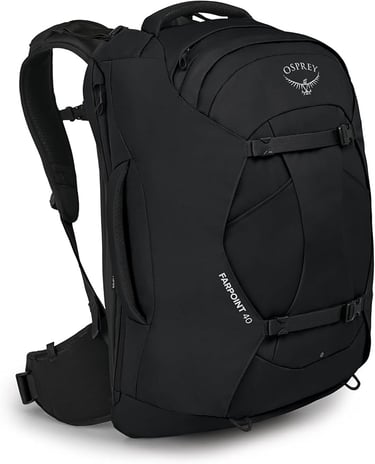
Osprey Farpoint 40L
A proper travel backpack built for moving between European cities. Comfortable enough to wear all day, organised enough to live out of for weeks, and sized to meet most airline carry-on requirements. The bag most experienced Europe travellers eventually land on.
What to Look for in a Travel Backpack for Europe
Before getting into specific recommendations it is worth understanding what actually matters in a travel backpack for Europe because the priorities are different to hiking or everyday use.
Capacity between 35L and 50L This is the sweet spot for Europe travel. Smaller than 35L and most people struggle to pack enough for a week or more. Larger than 50L and you are almost certainly checking the bag — which means extra fees, baggage claim queues, and the stress of lost luggage. A 40L bag is the most popular choice among experienced Europe travellers for good reason.
A back panel that stows away European cobblestones, narrow hostel corridors, and overhead lockers all require you to handle your bag in ways that exposed shoulder straps make difficult. A back panel that zips away and conceals the straps protects them from damage and makes the bag easier to handle in tight spaces.
Comfortable suspension for a full day of wear On a typical Europe travel day you will wear your bag through airports, metro stations, city streets, and up stairs. A bag with a proper hip belt and an adjustable harness transfers weight from your shoulders to your hips and makes a full pack genuinely comfortable for hours rather than just manageable for twenty minutes.
Organised internal layout Moving between cities every few days means accessing your bag regularly without unpacking everything. A bag with a dedicated laptop sleeve, a toiletries pocket, and clear internal organisation means you spend less time digging and more time actually exploring.
Durable materials that handle real travel A Europe trip puts a bag through airport carousels, overhead lockers, cobblestone dragging, and the occasional hostel floor. Quality materials and reinforced stress points are worth paying for on a bag you will use repeatedly.
The Best Travel Backpacks for Europe
Best Overall: Osprey Farpoint 40L
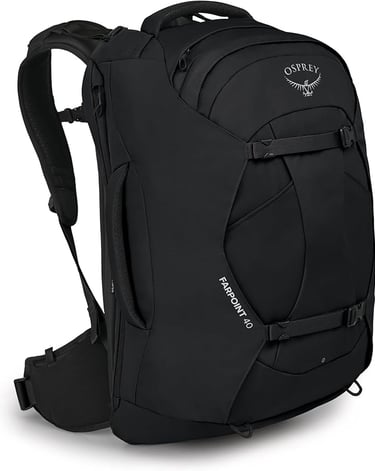
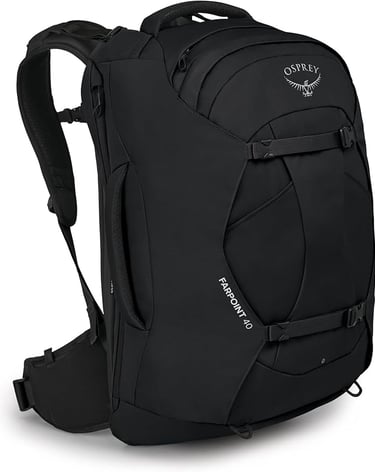
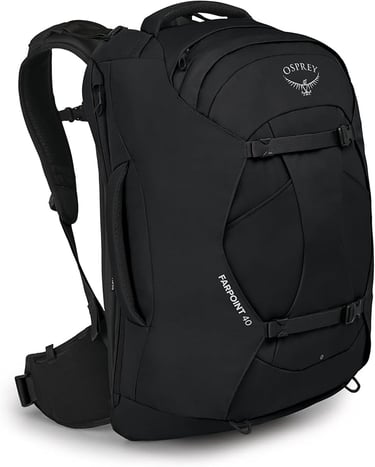
The Osprey Farpoint 40L is the backpack that comes up repeatedly in conversations about Europe travel for a reason. It has been refined over multiple generations into something that handles the specific demands of city-based European travel better than almost anything else at its price point.
The suspension system is borrowed from Osprey's hiking range which means it is significantly more comfortable than most travel backpacks. A LightWire peripheral frame transfers load from the harness to the hip belt and a breathable mesh back panel keeps air circulating between the bag and your back on warm days walking through European cities. For a bag you might wear for six or eight hours on a heavy travel day this makes a real difference to how you feel at the end of it.
The internal organisation is set up specifically for travel rather than hiking. A large main compartment opens fully for easy packing and unpacking, a quick access laptop sleeve fits devices up to 16 inches, and an external toiletry pocket lets you get to your essentials at airport security without opening your main compartment. Compression straps inside the main compartment keep clothing from shifting when the bag is not completely full.
At 40L it meets most domestic carry-on requirements which means you can fly budget European airlines without checking it. This alone saves a meaningful amount of money across a multi-flight Europe itinerary.
What I like about it:
40L capacity sits in the carry-on sweet spot for most European airlines
LightWire frame and hip belt make it comfortable for full day wear
Breathable AirScape mesh back panel for ventilation
Quick access laptop sleeve fits up to 16 inch devices
External toiletry pocket accessible without opening main compartment
Back panel and harness stow away completely when not needed
Made from recycled materials — bluesign approved fabric
Available in both men's and women's specific versions
The Best Travel Backpacks for Europe
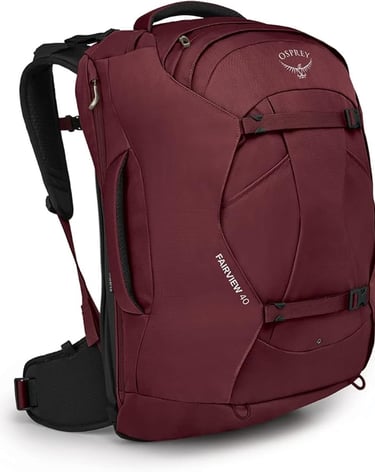
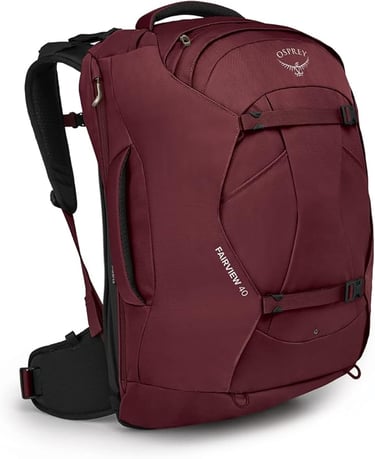
Best for Women: Osprey Fairview 40L
The Osprey Fairview 40L is the women's specific version of the Farpoint and shares almost everything that makes the men's bag so well regarded — with a fit and harness system designed specifically around a women's frame rather than simply scaled down from a unisex design.
The harness, hip belt, and back panel are all women's specific which makes a meaningful difference to how comfortable the bag feels over a full day of wear. A backpack that fits correctly distributes weight properly across your hips and shoulders. One that does not ends up putting all the load on your shoulders regardless of how good the suspension system is. The Fairview solves this by being designed from the ground up for a women's torso length and shoulder width rather than adapted from a men's version.
In terms of features the Fairview matches the Farpoint closely. The same LightWire frame transfers load from the harness to the hip belt, the same breathable mesh back panel promotes airflow, and the same stowaway system conceals all the straps when you need the bag to look like luggage rather than a hiking pack. The main compartment opens via a large U-shaped zip for easy access, a laptop sleeve fits devices up to 16 inches, and an external toiletry pocket keeps your airport essentials accessible without opening the main compartment.
At 40L it meets carry-on requirements for most European airlines which means no checked bag fees on the budget airline routes that make European travel affordable.
What I like about it:
Women's specific fit — harness, hip belt, and back panel designed for women's torso proportions
LightWire frame transfers load from harness to hip belt for all-day comfort
Breathable mesh back panel with good ventilation on warm days
Full U-zip access to the main compartment for easy packing
Quick access laptop sleeve fits up to 16 inch devices
External toiletry pocket for airport security ease
Stowaway harness system keeps straps protected when not in use
Lockable zippers on the main compartment and laptop sleeve
Meets carry-on requirements for most European airlines
Made from recycled materials — bluesign approved
Best for Longer Trips or Travellers Who Want the Flexibility of Wheels:
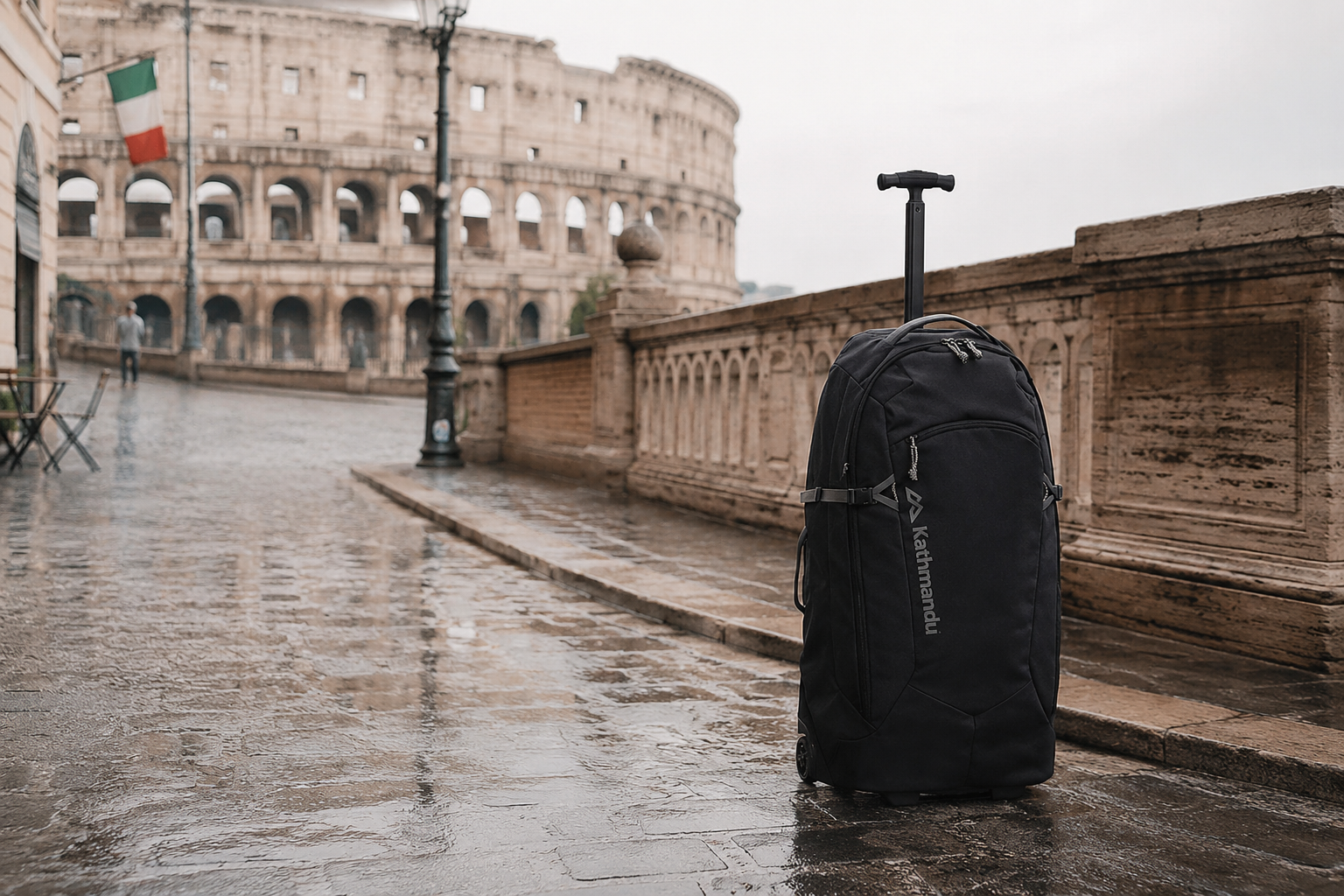
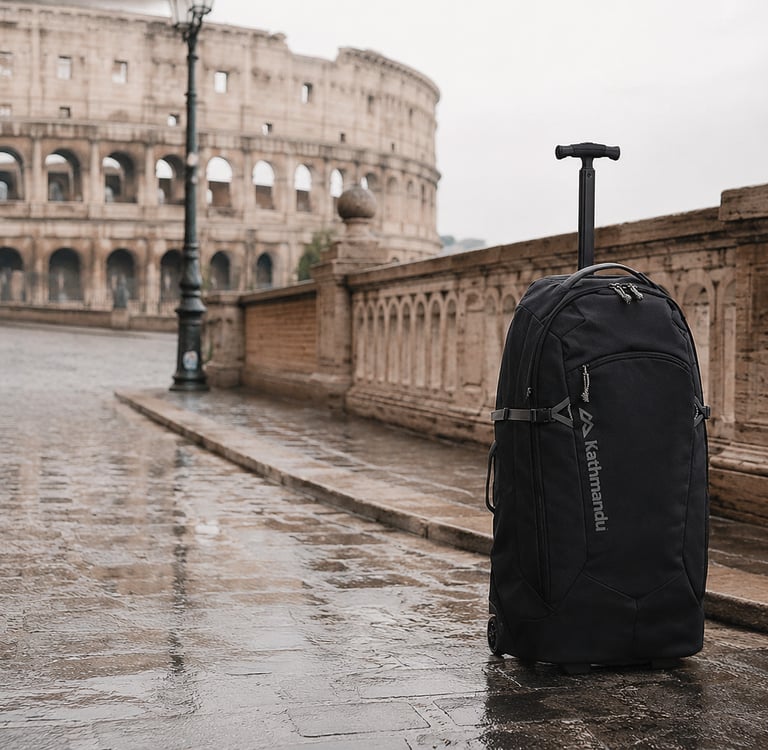
I have used this bag on a Europe trip and it genuinely suits a specific type of traveller very well. If you are going for longer than two weeks, staying in one or two places rather than moving cities constantly, or travelling with people who are not committed to carry-on only — the Kathmandu Hybrid Trolley is worth serious consideration.
What makes it different to a regular suitcase or a regular backpack is the combination. The wheels and telescopic handle mean you roll it through airports and flat city streets the way you would a suitcase. Then when you hit cobblestones, stairs, a packed metro, or anywhere that wheels become a liability, the stashable harness system deploys and it becomes a wearable backpack. Having used it I can tell you this transition works better than you might expect from a bag of this size.
The 70L capacity is generous. A week or two of clothing with room for layers, shoes, and souvenirs on the way home is all manageable without compression or careful editing. The lockable zips add a level of security that most soft backpacks cannot offer which matters when you are leaving bags in hostel storage or overnight trains.
The honest trade-off is size. At 70L this exceeds carry-on limits on most budget European airlines and will need to be checked on Ryanair and EasyJet flights. That means checked bag fees on budget routes and the associated baggage claim time. For trips that are mostly train based across Europe or that involve fewer budget airline legs this is not a significant issue. For a multi-flight budget airline heavy itinerary it adds cost.
What I like about it:
Genuinely versatile — rolls as a trolley and wears as a backpack
70L capacity handles longer trips without careful packing
Lockable zips for security in hostels and on trains
Stashable harness system deploys quickly when needed
Made from RENU recycled polyester — sustainably constructed
Internal mesh pocket and external front pocket for organisation
Compatible with Kathmandu's Gluon daypack attachment
Well known and trusted brand in Australia and New Zealand
The honest caveat: at 70L this is a checked bag on most budget European airlines. Factor in checked bag fees if your trip involves multiple Ryanair or EasyJet flights. For train-heavy or longer Europe trips this is not an issue.
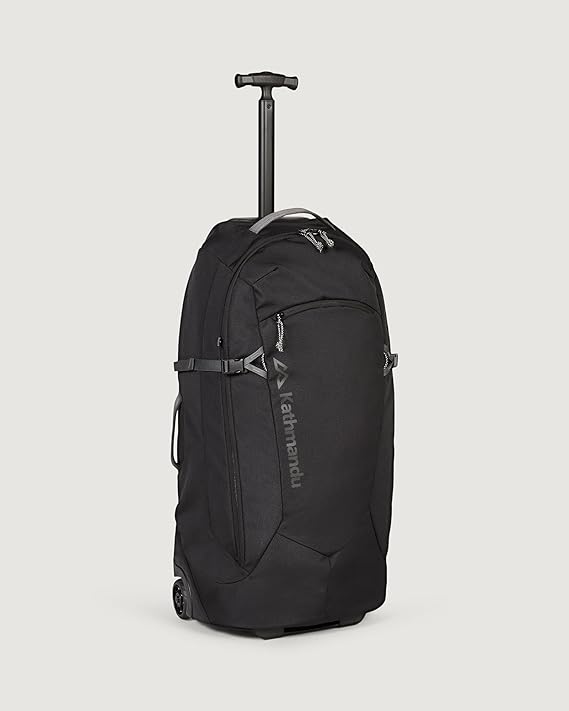
Kathmandu Hybrid Trolley v5 70L
Which Bag is Right for Your Europe Trip?
The choice between these two bags comes down to how you are travelling rather than which is objectively better. Both are well made and genuinely suited to European travel — just in different ways.
Choose the Osprey Farpoint 40L if:
You want to stay carry-on only and avoid checked bag fees
You are moving between multiple cities and want a bag that is comfortable to wear all day
Your trip involves budget airline flights where checked bags cost extra
You are travelling for up to three weeks and pack reasonably efficiently
You want a true backpack experience through European cities
Choose the Kathmandu Hybrid Trolley 70L if:
You are travelling for three weeks or more and need the extra capacity
Your itinerary is mostly train based across Europe rather than budget airline heavy
You want the flexibility of wheels for smooth surfaces and backpack straps for everything else
You are travelling with checked luggage anyway and the extra fee is not a concern
You prefer having more space and are not committed to packing light
Free Europe Packing Checklist
If packing for Europe feels overwhelming, I’ve put together the exact checklist I used to stay organised and avoid overpacking.
It works alongside the packing system in this post and helps keep everything simple on travel days.
What About Packing Your Travel Backpack for Europe?
Having the right bag is only part of the equation. How you pack it matters just as much — particularly for a backpack where poor organisation means digging through everything every time you need something.
Packing cubes are the single most useful addition to any travel backpack for Europe. They keep your clothing in separate compressed sections, make repacking between cities take minutes rather than a frustrating morning exercise, and mean you can actually find what you are looking for without tipping the whole bag out on a hostel bed.
For a 40L backpack like the Osprey Farpoint a set of three or four cubes in different sizes covers clothing, underwear and socks, and a tech or accessories category. The bag then becomes a system rather than a container.
🧳 The packing cubes I use on every Europe trip
How to pack a travel backpack for Europe properly — and the exact cubes that make it work.
Read the post →
🔌 The travel adapter I use across all of Europe One adapter that covers every
European country including the UK with USB ports so everything charges simultaneously
Read the post →
Keeping your most accessed items — passport, boarding passes, phone charger, travel adapter — in the external pocket or the top of the main compartment rather than buried at the bottom saves significant time and frustration on busy travel days.
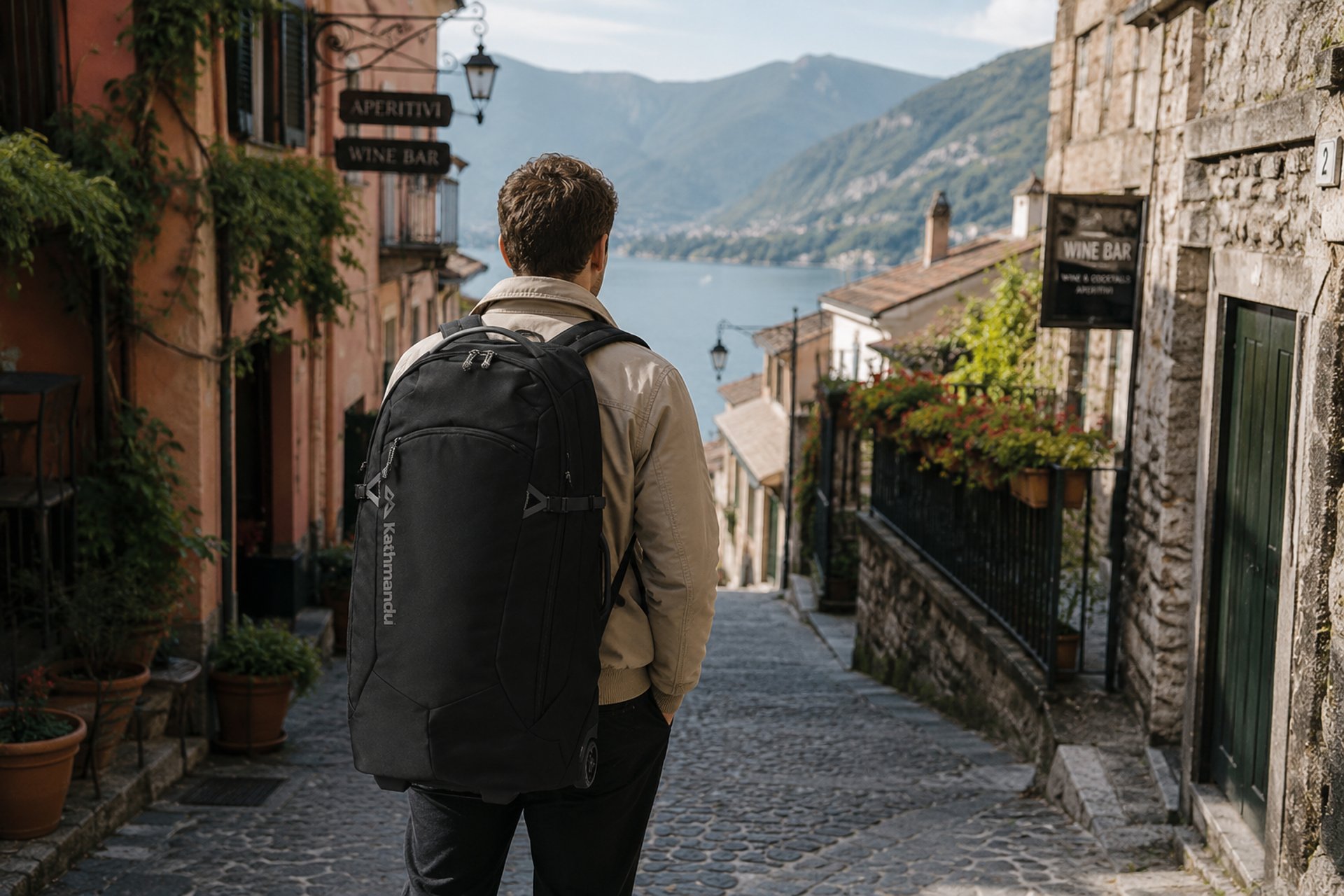
A few things that make a real difference once you are actually on the ground with your bag:
Wear your backpack on your front in busy areas. Pickpocketing is a real concern in crowded tourist areas across Europe — particularly in Barcelona, Rome, Paris, and Prague. Wearing your bag on your front in busy markets, metro stations, and tourist sites is the most effective deterrent.
Use the hip belt properly. Most people wear travel backpacks without engaging the hip belt which defeats the purpose of having one. The hip belt should sit across your hip bones not your waist and should carry the majority of the bag's weight. Doing this correctly transforms how comfortable a full pack feels on a long walking day.
Do not pack your most valuable items at the bottom. Passport, travel card, phone, camera — these all need to be accessible quickly and securely. The external pocket or a small dedicated pouch near the top of the main compartment is the right place for these rather than buried under clothing.
Compression straps are your friend. When your bag is not completely full, internal and external compression straps stop your contents shifting around. A shifting load feels significantly heavier than a stable one of the same weight. Use them every time.
Tips for Travelling Europe With a Backpack
🎒 The travel backpack I would recommend to most Europe travellers The Osprey Farpoint 40L hits the carry-on size limit for most European airlines, has a genuine hiking-quality suspension system, and is organised for the specific demands of city-based European travel. The bag most experienced travellers eventually land on.
Frequently Asked Questions
What size backpack is best for a Europe trip?
Between 35L and 45L suits most Europe travellers well. This range keeps the bag within carry-on limits for most airlines, holds enough for one to three weeks of travel when packed efficiently, and is manageable to wear all day through European cities. Larger than 50L and you are almost certainly checking the bag.
Can you do a Europe trip with just a backpack?
Yes — many experienced Europe travellers use nothing but a backpack and find it significantly more convenient than wheeled luggage on cobblestones, metro stairs, and hostel corridors. A 40L backpack packed with packing cubes handles most Europe trips of one to three weeks comfortably.
Is the Osprey Farpoint 40L carry-on compliant for European airlines?
It meets most airline carry-on size requirements. For standard carry-on allowances on most European carriers including full service airlines it fits within limits. For Ryanair's free personal item allowance it exceeds the 40x20x25cm dimensions — you would need to pay for Ryanair's cabin bag add-on or use a smaller bag for the free allowance. On EasyJet's standard carry-on allowance it fits within the 45x36x20cm limit.
What is the difference between a travel backpack and a hiking backpack?
Travel backpacks are designed for city use with flat back panels that stow away, internal organisation for electronics and documents, and suitcase-style opening for easy packing. Hiking backpacks prioritise load carrying over cobblestones and trail use, with external frame systems and gear attachment points that are not useful for city travel. The Osprey Farpoint borrows the suspension comfort of a hiking pack while keeping the travel-specific organisation features.
Is the Kathmandu Hybrid Trolley worth it for Europe?
For the right trip yes. If your Europe itinerary is mostly train based, involves longer stays in fewer cities, or requires more than 40L of capacity, the Hybrid Trolley's combination of wheels and a wearable backpack harness is genuinely useful. The trade-off is that at 70L it exceeds carry-on limits on budget European airlines and will incur checked bag fees on Ryanair and EasyJet flights.
Do I need packing cubes for a travel backpack?
Not strictly necessary but genuinely useful. A travel backpack without packing cubes becomes a disorganised container that you dig through every morning. With packing cubes the same bag becomes an organised system where everything has a place and repacking between cities takes minutes. For any Europe trip longer than a week I would consider them essential rather than optional.
Still planning your Europe trip?
Start with what makes the journey easier — not more complicated.
Contact
Subscribe
hello@europeunpacked.com
© 2026. All rights reserved.
This page may include affiliate links — at no cost to you.